
How Improper Footwear Leads to Back and Knee Pain
- Dr. Chandana Halaharvi

- May 3
- 3 min read
Understanding Footwear and back pain
The human body is a kinetic chain, meaning the position and movement of one segment influences everything above and below it. The foot is the base of this chain, and just as a building with an unstable foundation develops problems, a body with poor foot mechanics will often experience pain up the chain.
Overpronation, in which the foot rolls excessively inward, is one of the most common mechanics issues that travels upward. This inward rolling causes the shin to rotate, increasing stress on the inner knee. Over time, this contributes to conditions like patellofemoral pain syndrome.
High heels shift the center of gravity forward, forcing the wearer to lean back and exaggerate the curve of the lower spine. This increases compressive forces on the lumbar vertebrae and contributes to chronic low back pain.
Flat, unsupportive shoes like flip-flops allow the foot to spread and flatten, placing the ankle, knee, and hip in less favorable positions. The lack of shock absorption transmits impact forces more directly to the joints.
Worn-out shoes are a frequently overlooked source of pain. As the midsole compresses and degrades, cushioning and support are lost. Most athletic footwear should be replaced every 300 to 500 miles.
Signs and Symptoms to Watch For
Shoes that are the wrong size or shape create their own problems. Shoes too narrow contribute to bunions, hammertoes, and nerve conditions. Getting a professional fitting is a worthwhile investment.
Motion control shoes are designed to reduce excessive pronation, but placing the wrong type of shoe on the wrong foot can actually worsen biomechanics. Someone with high arches needs a cushioned and flexible shoe, not motion control.
Whether you live in Sugar Land, Pearland, or anywhere in the greater Houston area, Thrive Foot and Ankle is here to help. Dr. Chandana Halaharvi specializes in footwear and back pain and takes a personalized approach to every patient's care.
Custom orthotics are often one of the most effective tools for correcting the foot mechanics that contribute to back and knee pain. They guide the foot into a more mechanically advantageous position throughout the gait cycle.
The connection between footwear and back pain is well-recognized in occupational health research. Workers on hard surfaces in inadequate footwear show higher rates of low back pain.

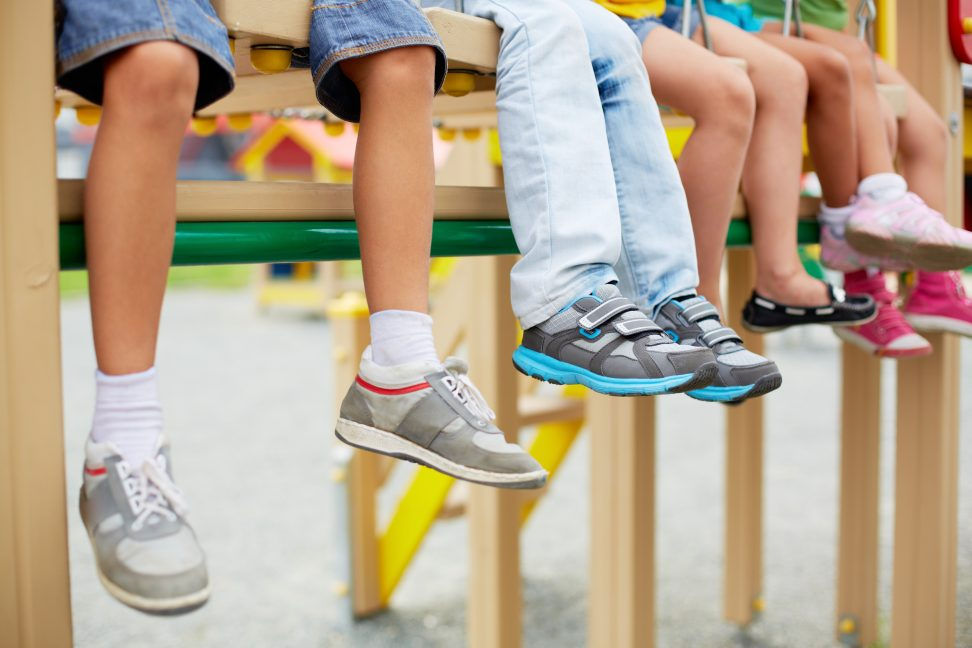
Children are not immune. Allowing children to wear supportive, well-fitted shoes supports normal development. Ill-fitting shoes during developmental years can contribute to structural problems that persist.
Treatment Options at Thrive Foot and Ankle
If you are experiencing unexplained knee, hip, or back pain, it is worth having your gait and foot mechanics evaluated. Many patients are surprised to discover that a foot issue was a primary driver of their pain.
Transitioning to better footwear should be done gradually. The muscles and connective tissues need time to adapt to new alignment and mechanics.
Taking your foot health seriously is one of the most impactful things you can do for your overall physical well-being. Investing in quality footwear and seeking evaluation when symptoms arise protects your entire body.
At Thrive Foot and Ankle, we evaluate foot mechanics and provide footwear recommendations and custom orthotics that address not just foot pain but its effects on the rest of your body. Book an appointment online to find out how your feet may be contributing to your pain.
Comments